
· Community and Culture
Why We Build an Ofrenda Together
Last fall, one wall at Amistad disappeared under marigold arches, papel picado and rows of photographs. Every picture was someone a family still talks about at dinner.
This week our community builds that wall again. Here is what Día de los Muertos honors, where it comes from, and why it has a home at our school.
What Día de los Muertos honors
Día de los Muertos welcomes back the people we have lost, for one visit each year. It is a reunion more than a time of mourning, full of color, food, music and family stories.
The celebration centers on November 1 and 2. November 1 honors children who have passed, and November 2 honors adults. Families set out the foods, drinks and small comforts their loved ones enjoyed, so the visit home feels like home.
La alegría del reencuentro, más que el luto.
Where the tradition comes from
The roots of Día de los Muertos reach back thousands of years, to the Aztec, Toltec and other Nahua peoples of what is now Mexico. They saw life and loss as one cycle, and the people they lost stayed part of the community.
After the Spanish arrived, those Indigenous rites blended with the Catholic feasts of All Saints' Day and All Souls' Day, which is why the celebration falls on November 1 and 2. In many Indigenous communities it also marks the close of the yearly maize harvest.
In 2008, UNESCO added the Indigenous festivity dedicated to the dead to its list of the Intangible Cultural Heritage of Humanity. Today families across Mexico, the United States and beyond keep it alive in their own way.
What you will see on the ofrenda
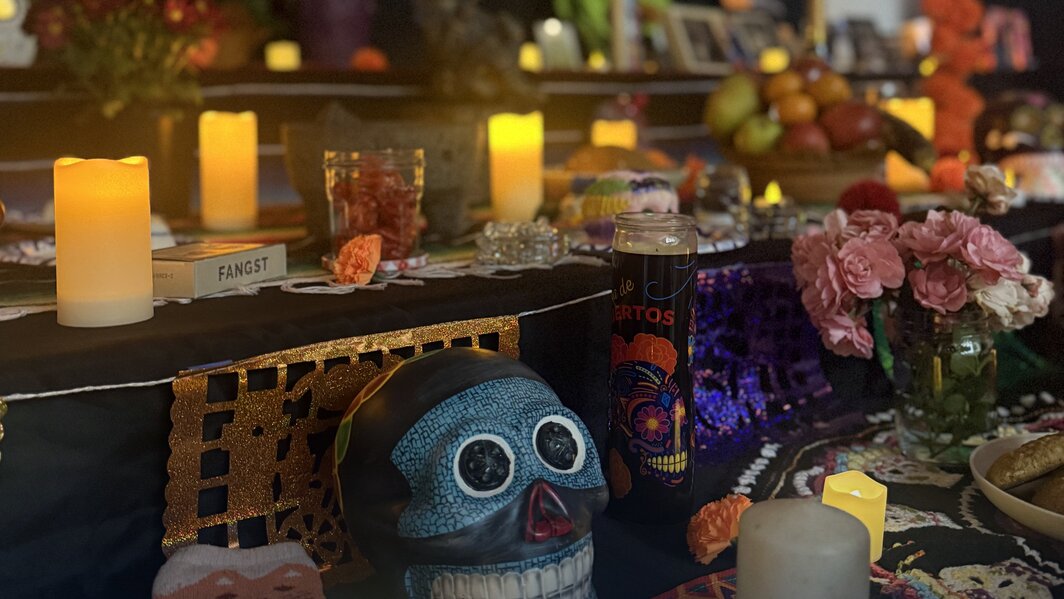
The ofrenda is a home altar built to welcome visiting spirits. Every piece on it has a job.
- Cempasúchil (marigolds): their bright color and scent guide souls to the altar, and families scatter petals to light the way home.
- Candles: light for the journey back.
- Photographs: the faces of the people being remembered, the heart of the altar.
- Pan de muerto: a sweet bread, often topped with dough shaped like bones, sometimes set in a circle for the cycle of life.
- Calaveras: colorful sugar skulls that honor life and memory with a smile.
- Papel picado: cut paper banners that move with the air.
- Favorite foods and drinks: whatever the person loved, set out for their visit.
Our community ofrenda grows into a portrait of who our school remembers.
Why it belongs at Amistad
As a Spanish and English Two Way Dual Language Immersion school, Amistad celebrates our community's linguistic and cultural diversity, "with an intentional commitment to honoring Black, Brown, and Indigenous students' experiences." Día de los Muertos is that commitment made visible: a tradition with Indigenous roots, practiced in Spanish and English, built by the whole school.
For students, the ofrenda is a lesson no worksheet can teach. A kindergartner learns the word cempasúchil by placing a flower. An older student hears a classmate explain who is in a photo and why that person mattered. That is what bilingual, biliterate and multicultural looks like on an ordinary Friday afternoon.
It also connects to this week's Sobremesa word, RECUERDO: a memory, and the way we keep the people we love close. Ask your child who they would put on the ofrenda, and listen to the story that follows.
¿A quién recuerdan en casa?
Bring it home
Día de los Muertos is November 1 and 2.
You don't need a big altar to take part. A photo, a candle and a favorite food on a shelf is an ofrenda. Ask your child what they learned at school this week, in whichever language comes first.
Recordamos a quienes amamos.
Sources
- Indigenous festivity dedicated to the dead, UNESCO Intangible Cultural Heritage
- Here's what to know about Day of the Dead, National Geographic
- Seattle Amistad School mission, Candid / GuideStar
Bilingual by design. Bilingüe por diseño.
Back to all posts